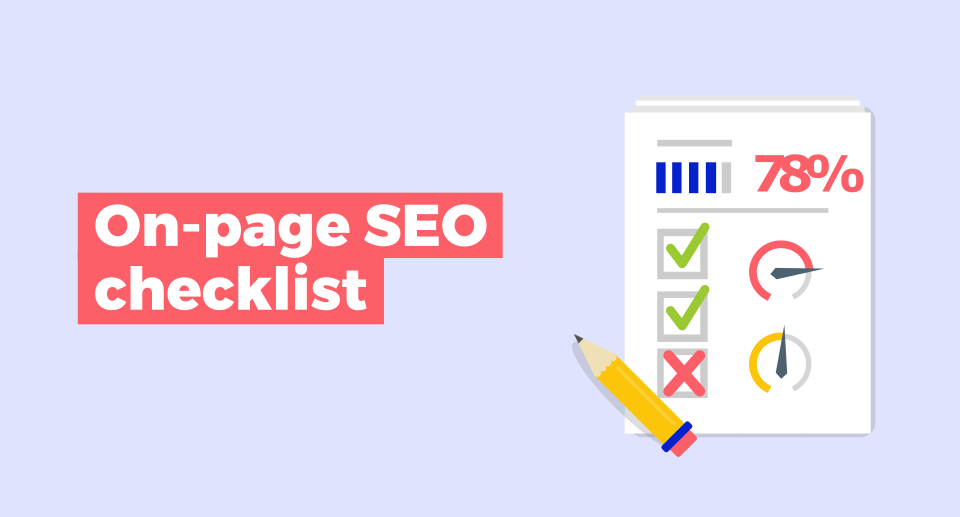
On-Page SEO Checklist for New Websites
Launching a new website puts you in a race against established giants. To win, you cannot just do what everyone else is doing. You need to be smarter. On-Page SEO is no longer about repeating a keyword five times in a blog post. It is about proving to search engines that your website is a reliable, expert source of information.
For a new business, every page must be a high-performance asset. This guide moves beyond the basics of title tags. We dive into the strategic architecture that actually moves the needle in today’s digital landscape.
Moving Beyond Keywords: The Rise of Entity SEO
In the past, search engines analyzed pages as strings of keywords. Today, they evaluate entities. An entity is a clearly defined concept, person, brand, product, or service that exists independently of the words used to describe it. For a new website, your first priority is to define your core entity with precision and consistency.
This shift is part of a broader evolution in how algorithms evaluate relevance and authority. In our guide on how Google ranks websites today, we break down the modern ranking systems that prioritize entities, trust signals, and user engagement over simple keyword density.
We no longer just look for keywords with high volume. We look for topic gaps. We find what your competitors are not talking about and we fill that void. This gives your new site an Information Gain advantage. In the age of AI-generated content, providing original value is one of the strongest ranking differentiators.
Content Architecture: The Silo and Cluster Model
One of the biggest mistakes for new websites is publishing random blog posts. This confuses search engine crawlers. Instead, you must build a Silo Structure. If you are starting from zero, our framework on how to build an SEO strategy from scratch explains how to structure pillar pages, cluster content, and internal linking to build authority from day one. This is a way of organizing your website so that its expertise is crystal clear.
The Pillar Page
This is your Master Guide. It is a long, comprehensive page that covers a broad topic in your industry. It serves as the heart of your silo. It provides a bird’s-eye view of a subject and links to more specific details.
The Cluster Content
These are smaller, highly specific articles that dive deep into sub-topics. For example, if your Pillar is Real Estate Investing, your clusters could be Tax Benefits for Landlords or How to Inspect a Fixer-Upper.
The Internal Link Logic
Every cluster page must link back to the Pillar page. This funnels all the ranking power back to your most important page. For a new site, this is the fastest way to build topical authority. It tells the search engine: “I am not just writing articles; I am building a library of knowledge”.
Technical On-Page: Core Web Vitals and User Signals
Search engines now judge your content based on how people interact with it. If a user clicks your link and leaves in three seconds, your rankings will drop. This is why technical On-Page SEO is now inseparable from User Experience (UX).
Interaction to Next Paint (INP)
This is a critical metric for 2026. It measures how fast your site responds when a user clicks a button or interacts with a menu. For a new site, you must ensure your code is clean. We avoid heavy, unnecessary scripts that slow down the response time. Every millisecond of delay is a potential lost customer.
Layout Stability (CLS)
Nothing frustrates a customer more than a button that moves right before they click it. This usually happens because images don’t have defined sizes in the code. Ensuring your layout is stable is a key part of staying in good graces with modern algorithms.
Mobile-First Indexing
Google does not care how your site looks on a laptop. It ranks you based on the mobile version. Your font sizes must be readable without zooming. Your buttons must be “thumb-friendly.” If the mobile experience is poor, the desktop ranking will never rise.
Advanced Image Optimization and Visual Intent
Images are no longer just decorations. They are data points. For a new website, images can be a shortcut to the first page through Image Search.
- Contextual Alt Text: Do not just say “blue car.” Say “electric blue luxury sedan for business hire.” This provides context for the algorithm.
- SVG and WebP Formats: We use vector graphics (SVG) for logos and modern formats for photos. This keeps the site light and fast.
- Visual Hierarchy: Place your most important image at the top of the page. Ensure the filename is descriptive. The filename is a hidden signal that tells the bot what the page is about.
The E-E-A-T Framework for New Brands
As a new website, you have zero trust in the eyes of the algorithm. You must manufacture this trust through the E-E-A-T framework: Experience, Expertise, Authoritativeness, and Trustworthiness.
The Power of Outbound Citations
New business owners are often afraid to link to other websites. They think they are losing traffic. This is a myth. Linking to high-authority sources proves your information is backed by facts. It places your site in a Trusted Neighborhood.
Author Credibility
Every article should have an author box. This box should link to a dedicated bio page that lists the author’s credentials. If you are an architect writing about design, the search engine needs to see your professional background. This expertise signal is vital for sites that deal with money or health.
Structured Data: Talking Directly to the Bots
While humans see your design, bots see your code. Schema Markup is a specialized language that tells search engines exactly what a page represents.
- Product Schema: If you sell items, this shows prices and stock levels directly in search results.
- FAQ Schema: This allows your questions to appear on the results page, taking up more vertical space and pushing competitors down.
- Local Business Schema: This is essential if you have a physical office. It connects your website to your physical location.
Search Intent Refinement: The Last Click Strategy
The ultimate goal of a search engine is to be the Last Click. They want the user to find the answer on your site and stop searching. If the user comes back to the search results after visiting you, it means you failed to satisfy their intent.
To avoid this, we analyze Micro-Intent:
- The Checklist Intent: Users want a quick list to follow.
- The Comparison Intent: Users want to see Product A vs. Product B.
- The Deep DiveIntent: Users want a detailed, multi-page explanation.
For a new site, we choose the intent that is currently under-served by your competitors. Executing this properly requires structured analysis, technical precision, and content planning. Through our professional SEO services, we align search intent, site architecture, and authority building into one cohesive growth strategy.
If everyone else has long guides, we win by providing a quick, interactive tool or a downloadable checklist.
Content Decay and Freshness Signals
SEO is not a “one and done” task. New websites often see a spike in rankings followed by a decay. This happens because content gets old. Even for a new site, you should have a maintenance schedule.
Every six months, look at your top-performing pages. Update the statistics. Add new images. Change the year in the title to the current one. This Freshness Signal tells search engines that your business is active and your information is still relevant to today’s market.
Optimizing for Answer Engine Visibility
With the rise of AI search, your content must be snackable. This means including a short, 40-word summary at the top of your long articles. This summary is what AI models use to generate answers.
We use clear, bolded headers that ask the questions your customers are asking. By providing direct answers in the first paragraph, you increase your chances of being the featured snippet at the top of the page. For a new website, this is the fastest way to leapfrog over older, more established competitors.
The Importance of Accessibility in Rankings
Accessibility is now a hidden ranking factor. If your site is easy to use for people with visual or hearing impairments, it is also easier for search bots to read. This includes high contrast for text, descriptive links (instead of click here), and keyboard-friendly navigation.
A site that is accessible is a site that is well-coded. Modern algorithms reward this level of professionalism. It shows that your business is prepared to serve all customers, which builds the “Trust” component of your E-E-A-T score.
